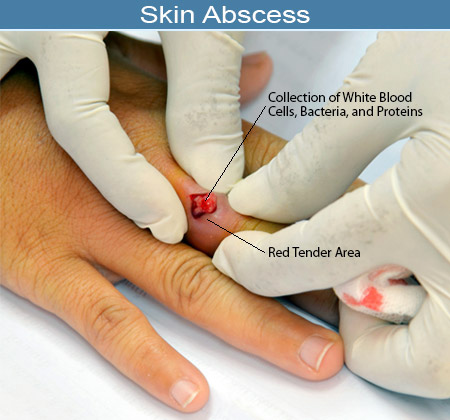
What is an abscess incision and drainage procedure?
Before a skin abscess drainage procedure, you may be started on a course of antibiotic therapy to
help treat the infection and prevent associated infection from occurring elsewhere in the body.
The procedure is typically done on an outpatient basis. If you have a severe bacterial infection,
you may need to be admitted to a hospital for additional treatment and observation.
Prior to making an incision, your doctor will clean and sterilize the affected area.
Usually, a local anesthetic is sufficient to keep you comfortable. It’s administered with a
needle into the skin near the roof of the abscess where your doctor will make the incision for
drainage. Examples of local anesthetics include lidocaine and bupivacaine.
The abscess drainage procedure itself is fairly simple:
- Your doctor makes an incision through the numbed skin over the abscess.
- Pus is drained out of the abscess pocket.
- Your doctor makes an incision through the numbed skin over the abscess.
- After the pus has drained out, your doctor cleans out the pocket with a sterile saline
solution.
- The abscess is left open but covered with a wound dressing to absorb any more pus that is
produced initially after the procedure.
- A deeper or larger abscess may require a gauze “wick” to be placed inside to help keep the
abscess open. This allows the tissue to heal properly from inside out and helps absorb pus
or blood during the healing process.
- Your doctor may send a sample of the pus to a lab for a culture to determine the cause of
the bacterial infection.
What’s the recovery like?
- Recovery time from abscess drainage depends on the location of the infection and its
severity.
- The gauze dressing on the skin over the wound incision may need to be in place for a couple
of days or a week for an abscess that was especially large or deep.
- If this dressing becomes soaked with drainage, it will need to be changed.
- If your doctor placed gauze wick packing inside of the abscess cavity, your doctor will need
to remove or repack this within a few days.
- You can expect a little pus drainage for a day or two after the procedure.
- Your doctor may also prescribe antibiotic therapy to help your body fight off the initial
infection and prevent subsequent infections. Pain relieving medications may also be
recommended for a few days.
Within a week, your doctor will remove the dressing and any inside packing to examine the wound
during a follow-up appointment. If everything looks good, you may be shown how to care for the
wound and change the dressing and inside packing going forward.
For the first few days after the procedure, you may want to apply a warm, dry compress (or
heating pad set to “low”) over the wound three or four times per day. This can help speed up the
healing process.
You may also be advised to gently clean the area with soap and warm water before putting on new
dressing. However, you should check with your doctor or a nurse about home care.
Healing could take a week or two, depending on the size of the abscess. During this time, new
skin will grow from the bottom of the abscess and from around the sides of the wound.